
Job Overview
Location: Cambridge, Ontario
Structure: Two-story detached house
Problem: Squirrel activity in the attic and beneath the home
Service: Squirrel removal and exclusion
Visits: 2
Summary
We completed a two-visit squirrel removal project at a detached home in Cambridge after the homeowner reported ongoing activity in the attic. Technician Andrew confirmed squirrels were accessing the structure through tight openings at soffit intersections and completed humane removal using one-way doors. Comprehensive roof exclusion work was also completed to secure additional vulnerable entry points. During the follow-up visit, no further activity was reported, the one-way doors were removed, and the remaining openings were permanently sealed.
Background / Property Context
The property is a two-story detached home with multiple roof intersections, roof vents, plumbing vents, and soffit transitions. These building features can develop small gaps over time that provide squirrels with access into attic spaces.
Customer Concern
The homeowner reported hearing squirrels in the attic and noted additional activity beneath the home. They requested a humane solution that would remove the animals and prevent them from returning.
Inspection & Findings
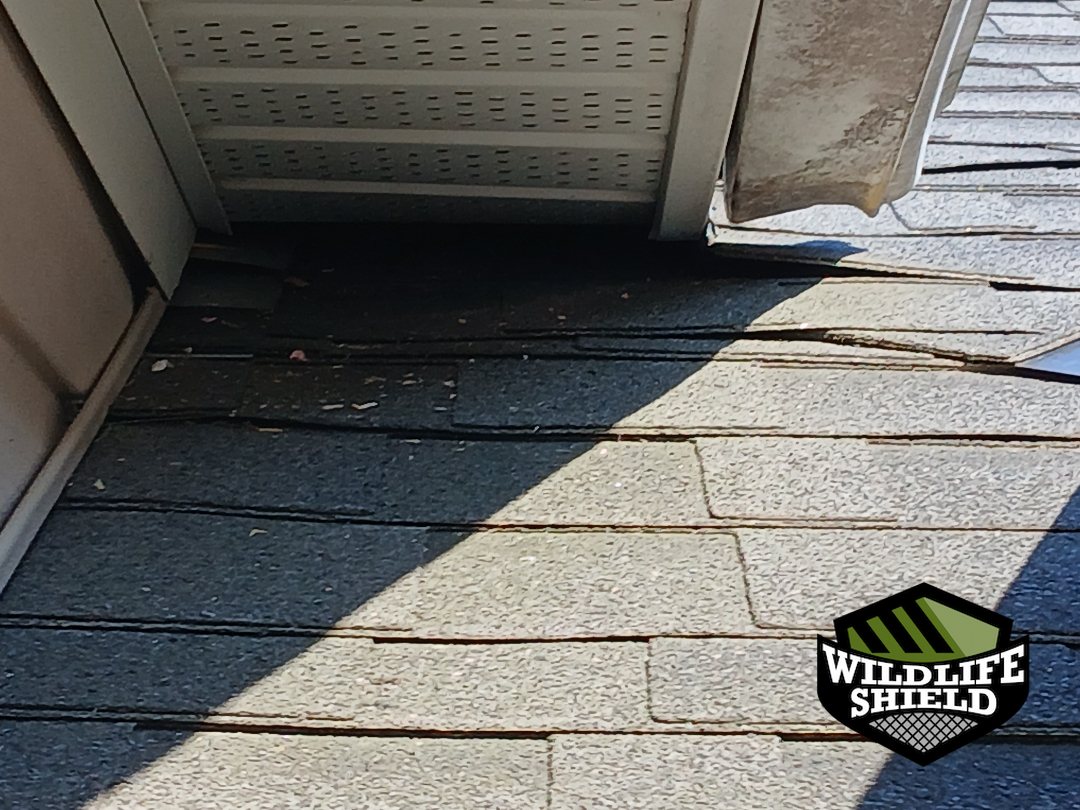
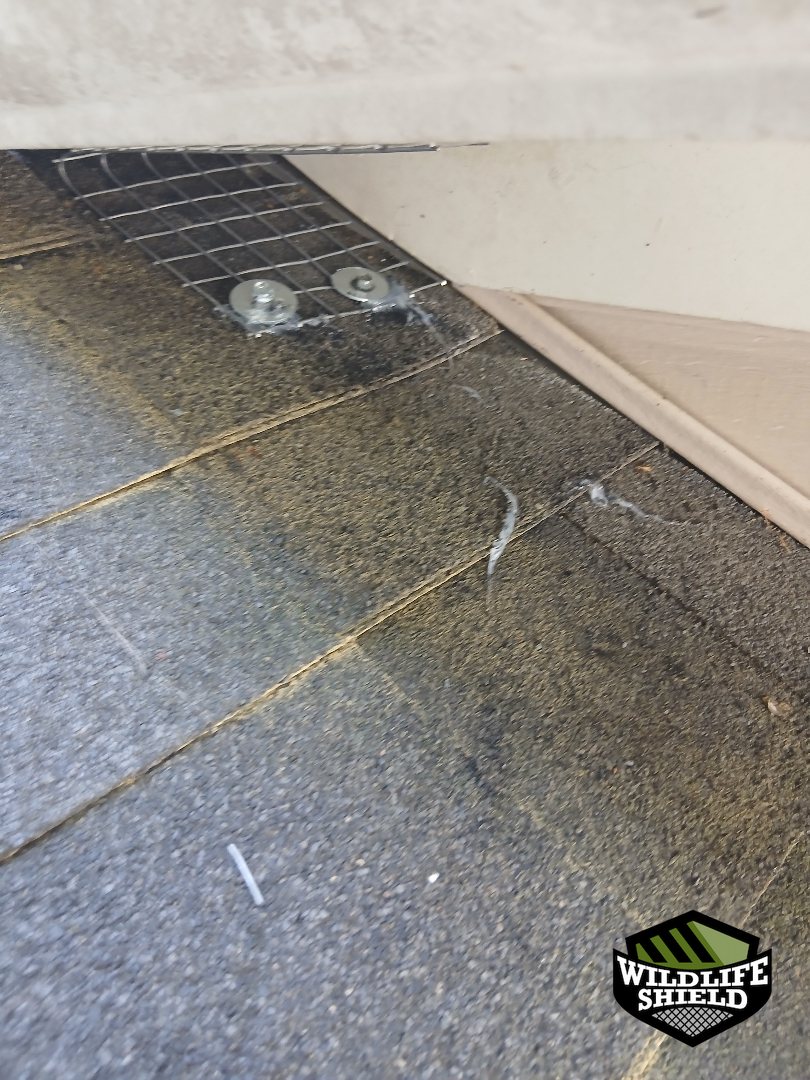
Andrew completed a full exterior inspection and confirmed squirrel activity at a soffit intersection where access into the attic had been established. The primary entry point was located in a confined area that required careful installation of exclusion equipment.
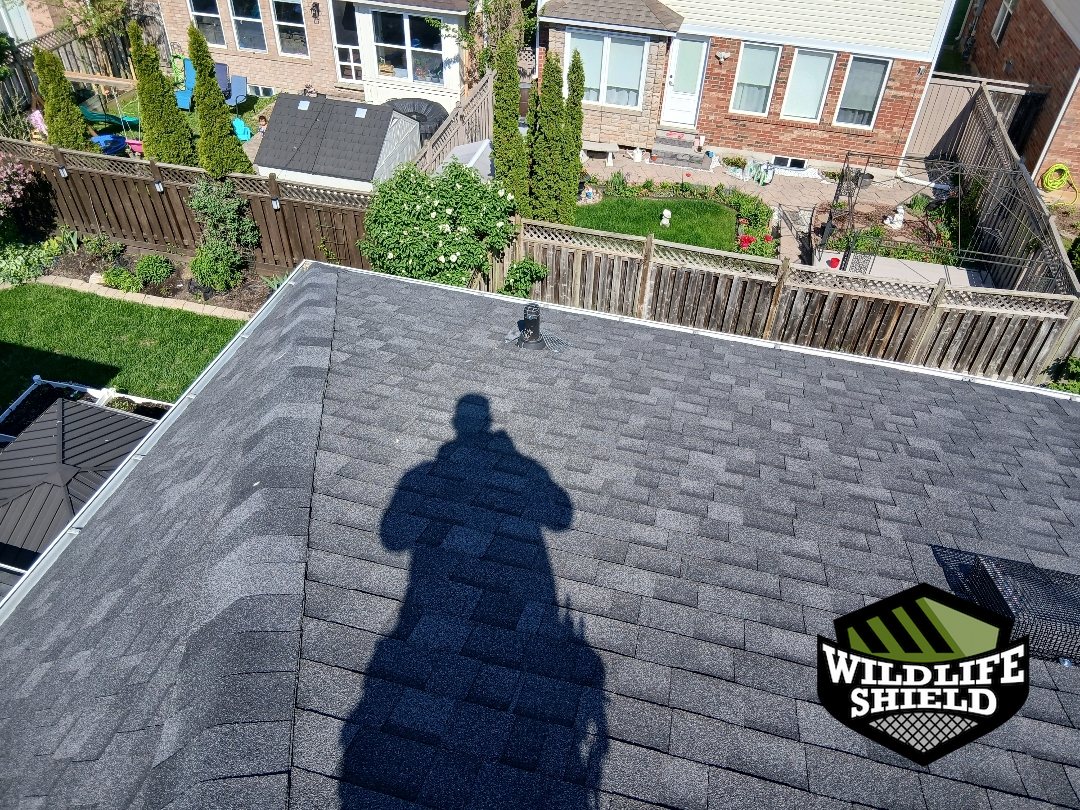
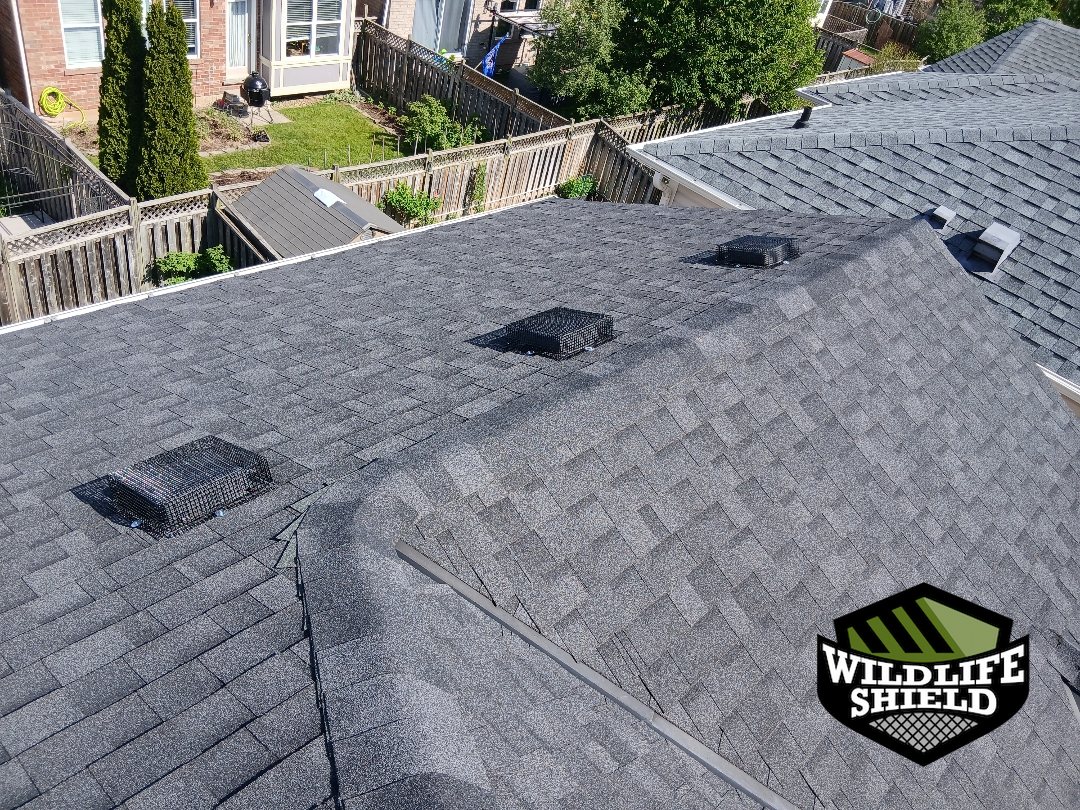
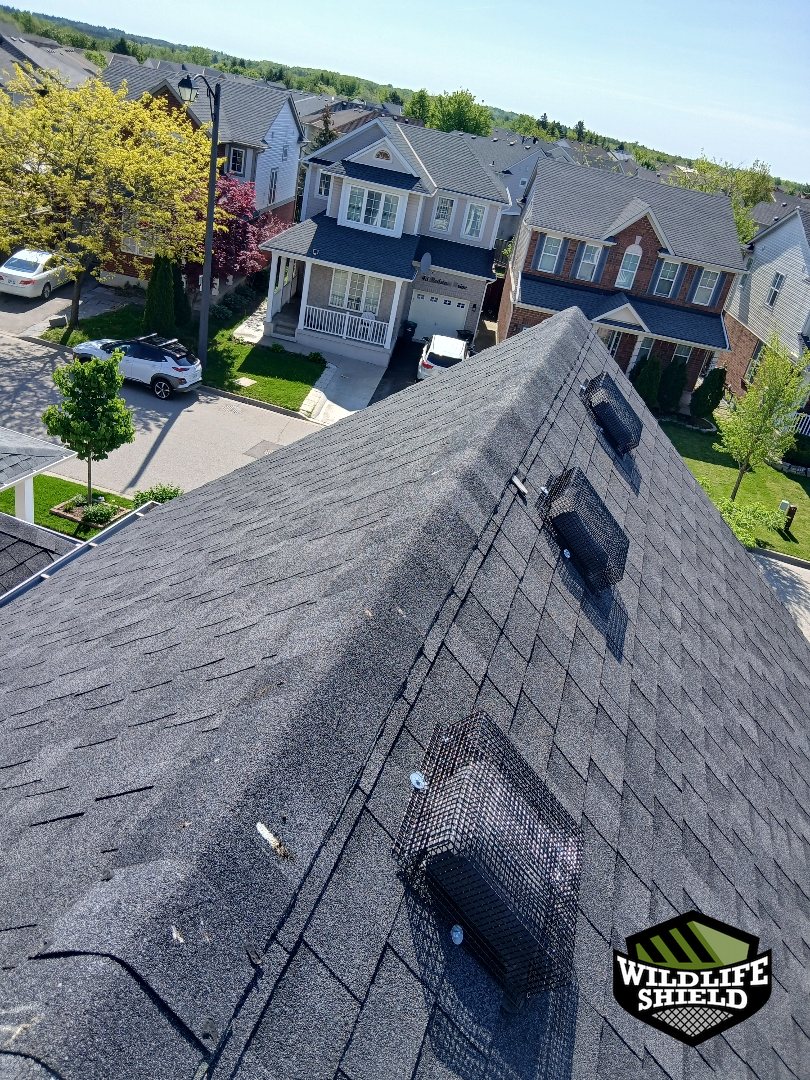
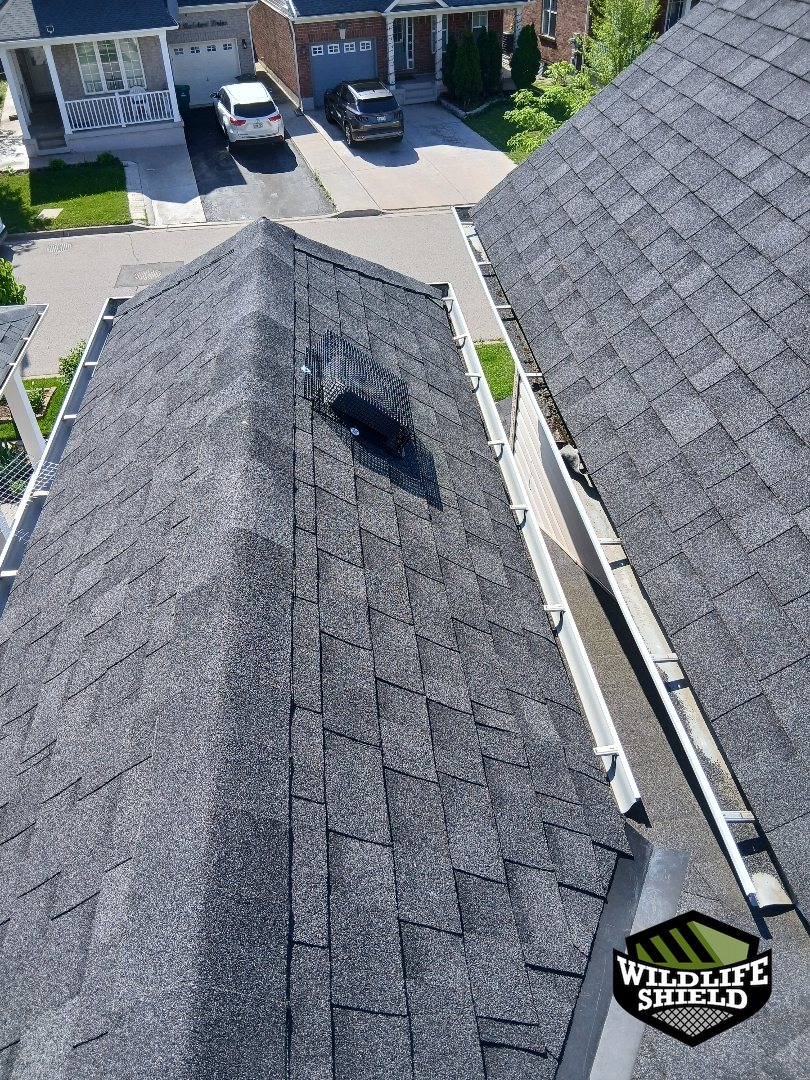
The inspection photographs show:
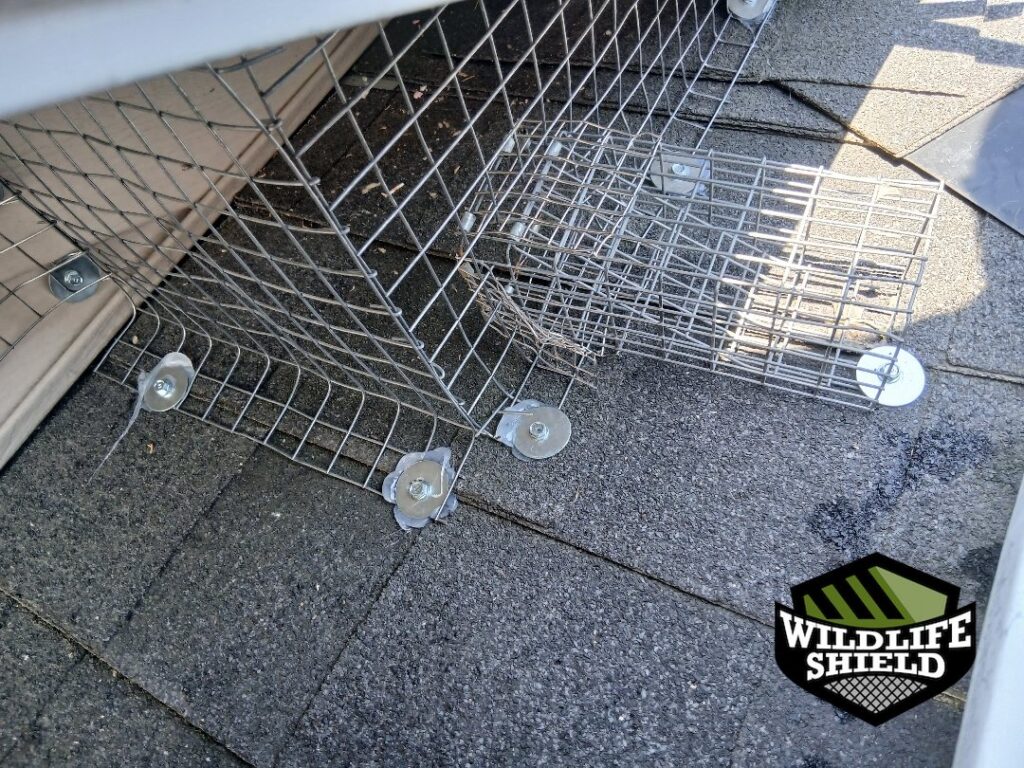
- A narrow opening at a soffit intersection consistent with an active wildlife entry point.
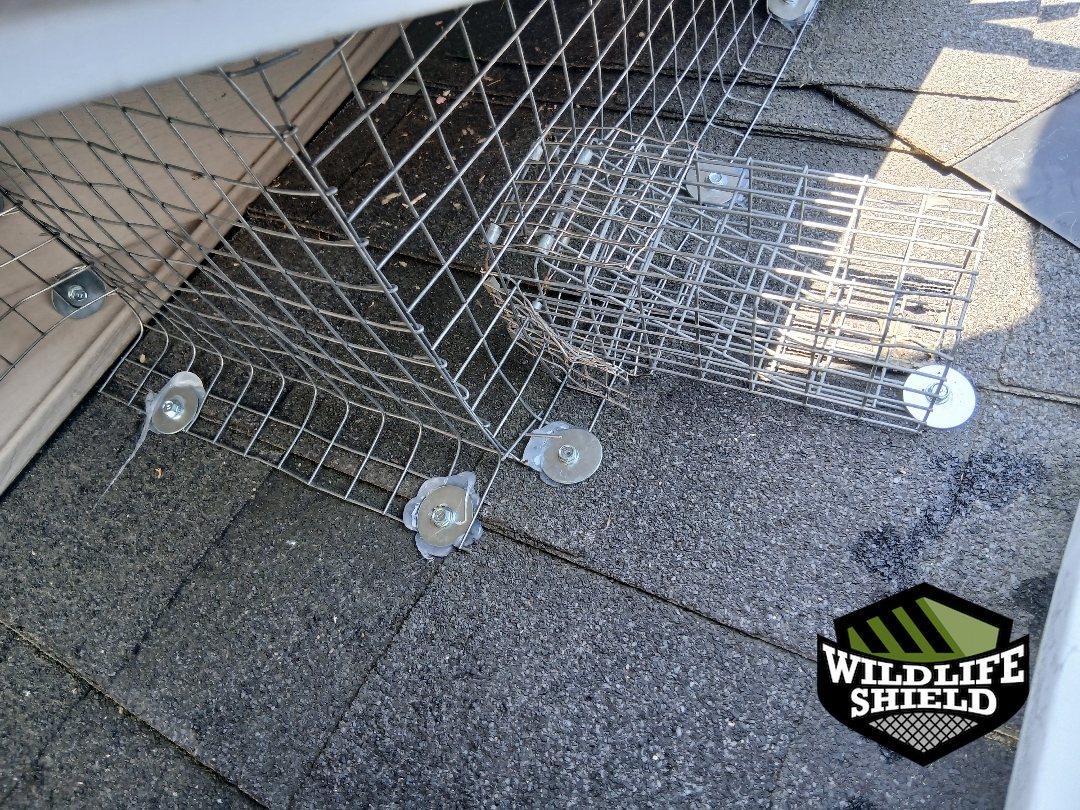
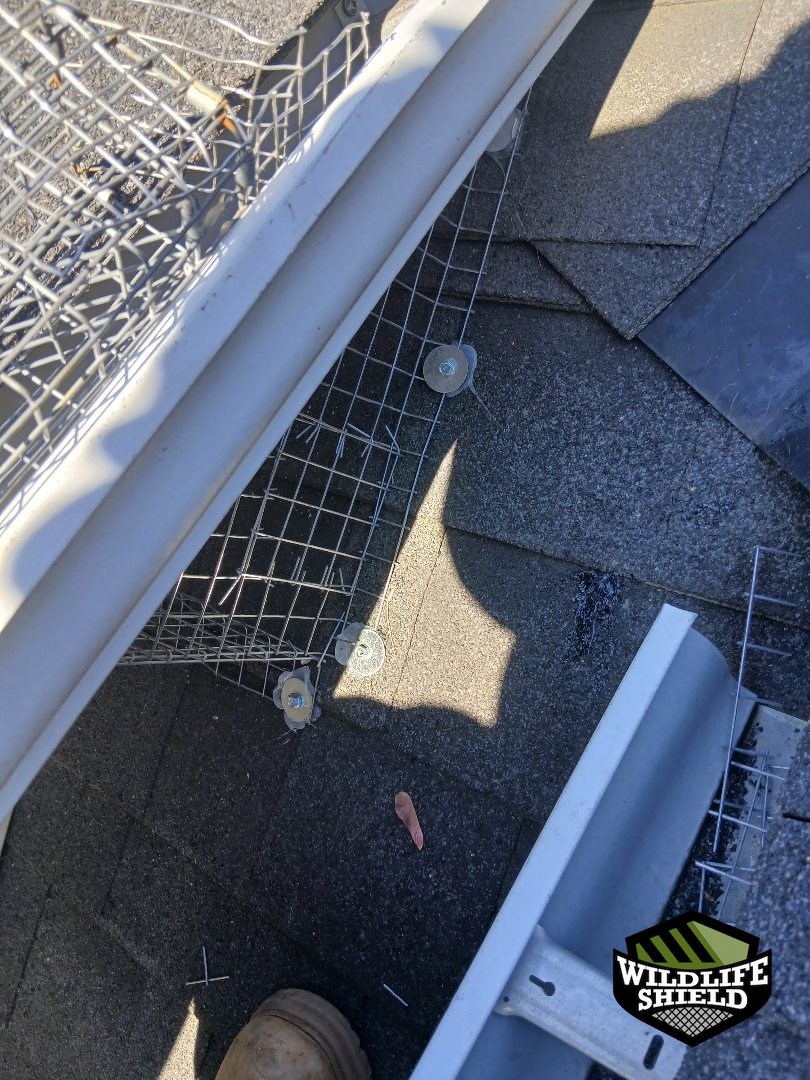
- One-way exclusion doors installed over the identified roof access locations.
- Multiple roof vents protected with galvanized steel wildlife screens.
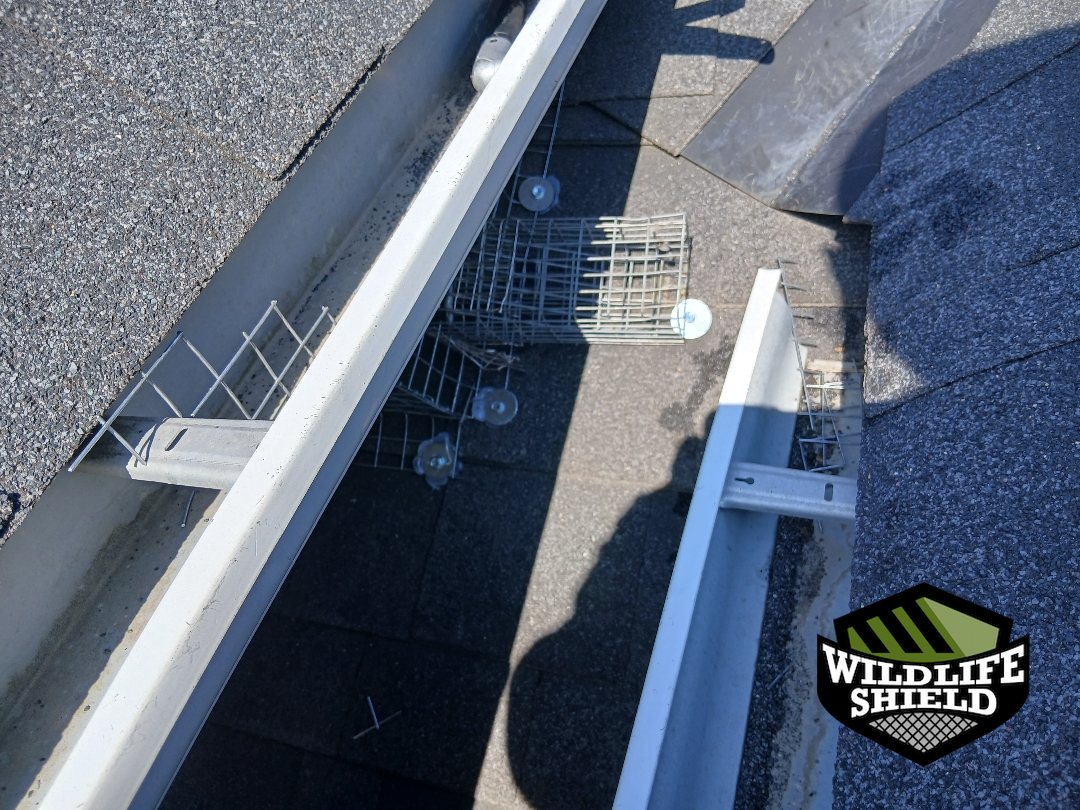
- Roof-level exclusion completed across vulnerable vent and soffit areas.
- A completed roof overview showing permanent exclusion measures in place.
Cause Analysis
Squirrels commonly access attics by exploiting small openings at rooflines, soffit intersections, and roof penetrations. Once established, they may continue using the same travel routes unless all accessible entry points are professionally excluded. Homes with multiple roof features often require comprehensive exclusion rather than sealing only the primary opening.
Treatment / Removal
During the first visit, Andrew confirmed active squirrel entry at a tight soffit intersection and installed two one-way doors over the primary access points to allow the animals to leave the structure without re-entering.
Additional exclusion work included:
- Installation of two one-way doors at soffit intersections.
- Securing seven roof vents with galvanized steel cages.
- Screening two plumbing vents with galvanized steel mesh.
- Sealing four soffit intersections using galvanized steel mesh.
- Disinfection of the primary entry area following exclusion work.
All wildlife removal was completed using humane, non-lethal exclusion methods.
Exclusion & Repairs
Permanent exclusion focused on reinforcing common roof entry locations using galvanized steel materials designed to withstand future wildlife activity. The completed work secured roof vents, plumbing vents, and soffit intersections while maintaining normal building ventilation.
Outcome & Confirmation
During the second visit, the homeowner reported no further squirrel activity in the attic or around the property. Andrew confirmed the exclusion had been successful, removed the one-way doors, inspected the completed repairs, and permanently sealed the former entry points. The exclusion system remained intact, and no additional wildlife activity was observed or reported.
Technician Notes
Andrew identified the primary squirrel entry at a confined soffit intersection that required careful installation of one-way doors. Extensive roof exclusion was completed to protect multiple vulnerable access points, and the follow-up inspection confirmed the squirrels had vacated before the temporary devices were removed and the openings permanently sealed.