
Job Overview
Location: Kitchener, Ontario
Structure: Two-story detached house
Problem: Skunk activity beneath the deck and shed
Service: Humane skunk removal and ground-level wildlife exclusion
Visits: 2
Summary
Our team completed a two-visit skunk removal project at a detached home in Kitchener after the homeowner reported skunk activity on the property. Technician Andrew confirmed that skunks had established shelter beneath both the backyard deck and the shed. Humane one-way doors were installed to allow the animals to leave naturally, followed by extensive trench screening around vulnerable structures to prevent future burrowing.
Background / Property Context
The homeowner reported repeated skunk activity around the backyard and suspected animals were living beneath outdoor structures. Inspection confirmed active burrowing beneath the deck and the shed, both of which provided sheltered spaces suitable for denning.
Customer Concern
The homeowner wanted the skunks removed humanely while preventing the animals from returning beneath the deck or shed. They also wanted long-term protection without affecting the use of the backyard structures.
Inspection & Findings
Andrew inspected the property and identified active burrow entrances beneath the deck and beneath the shed. The surrounding soil showed signs of excavation consistent with wildlife activity, confirming both locations were being used as access points.
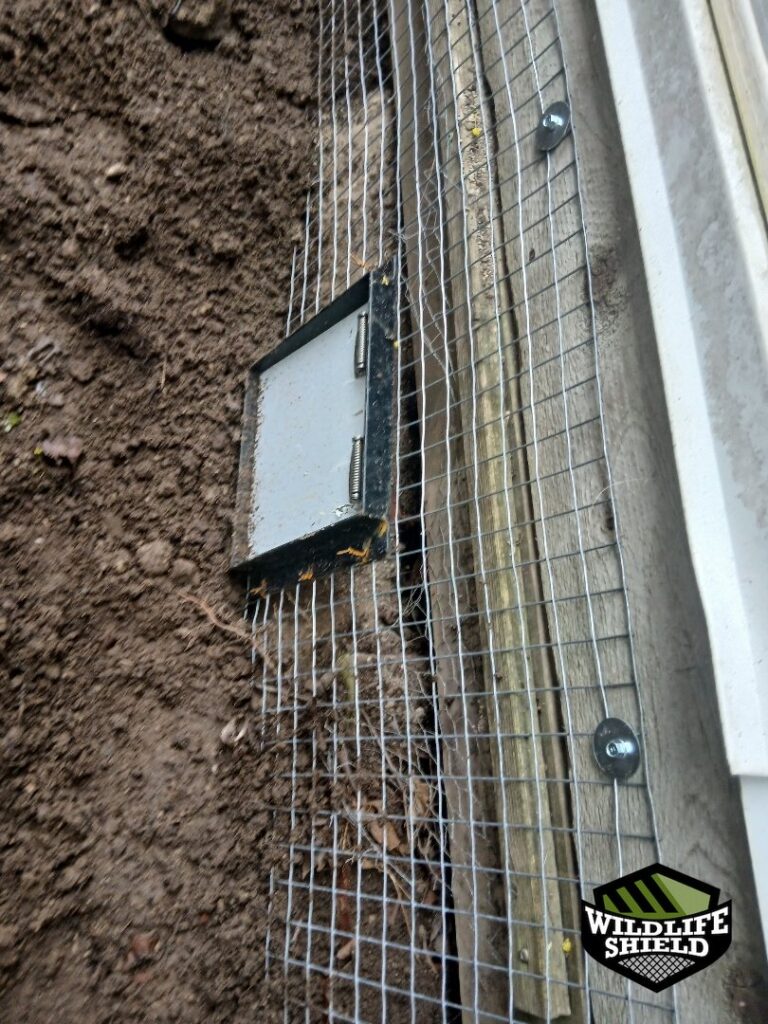
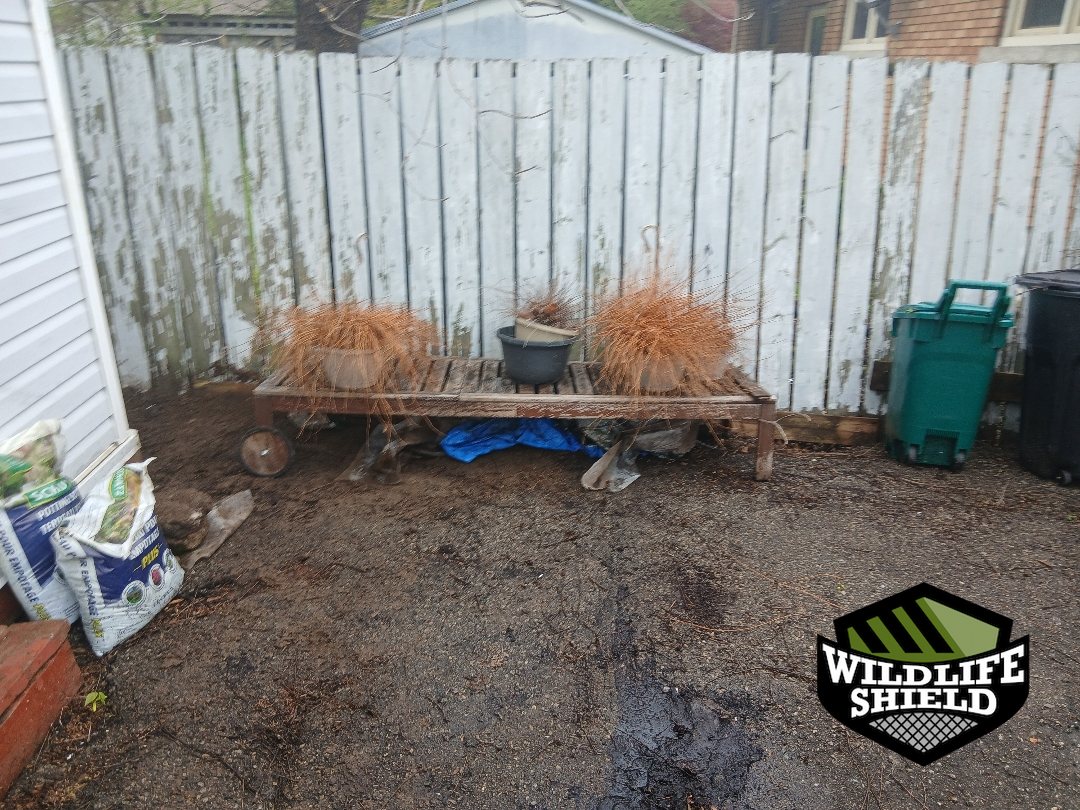
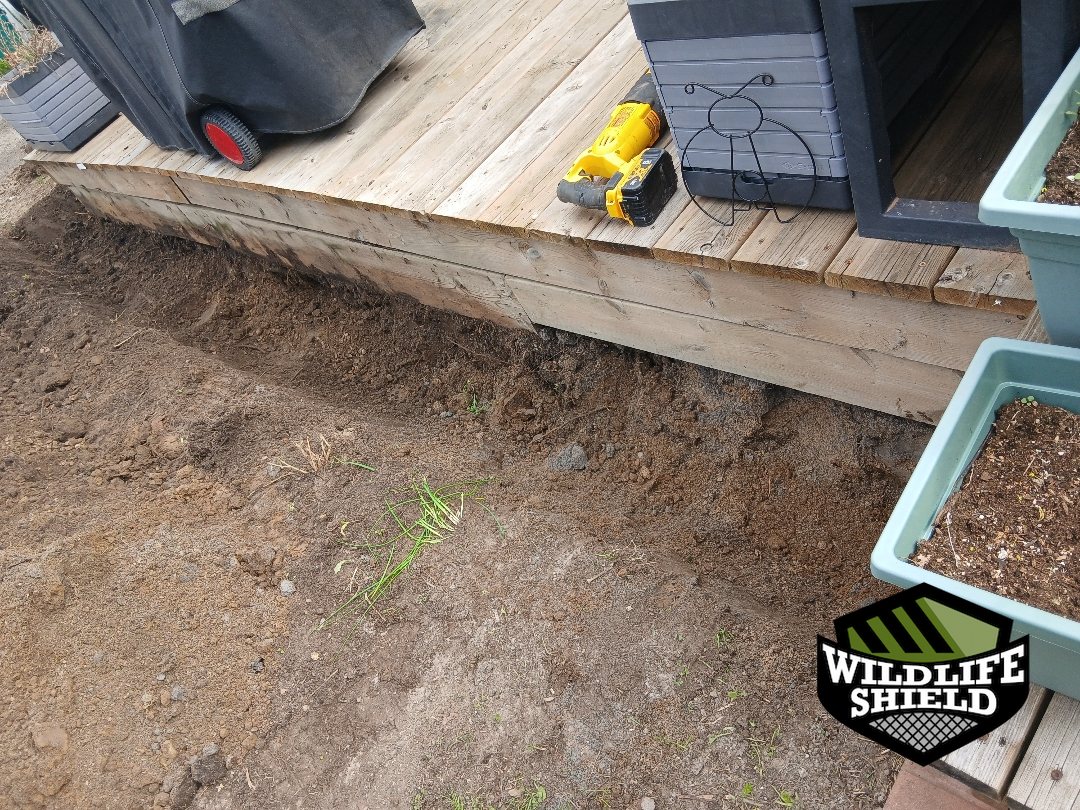
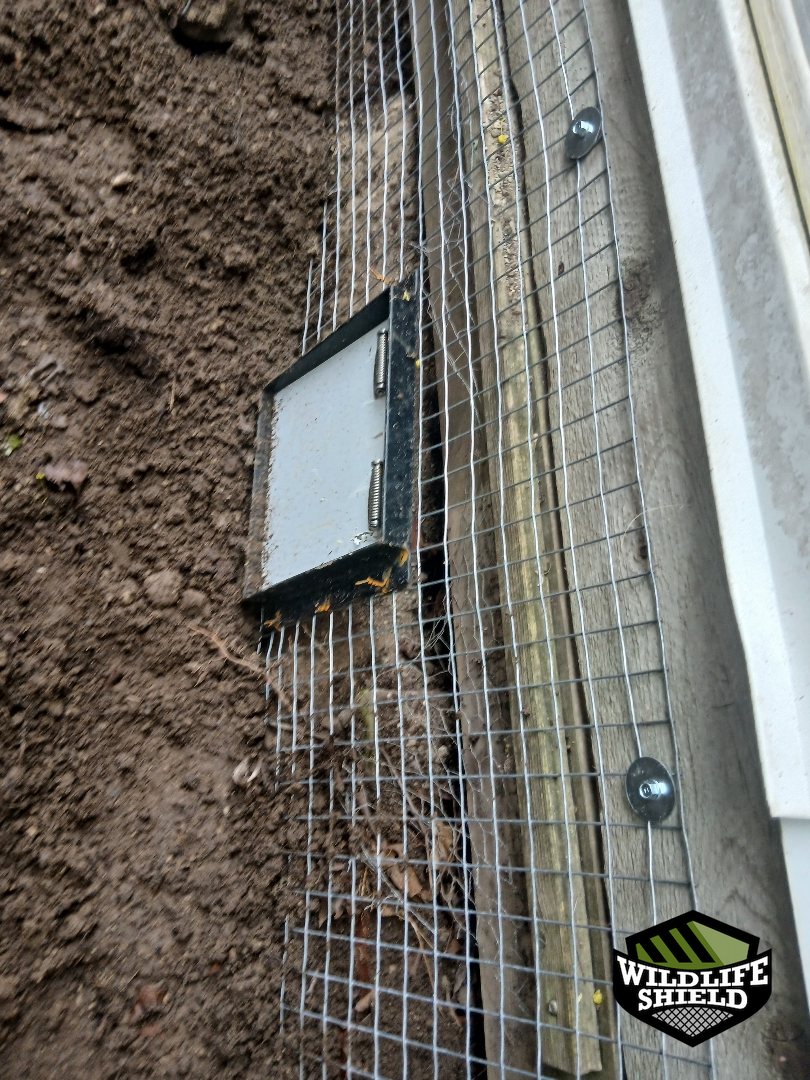
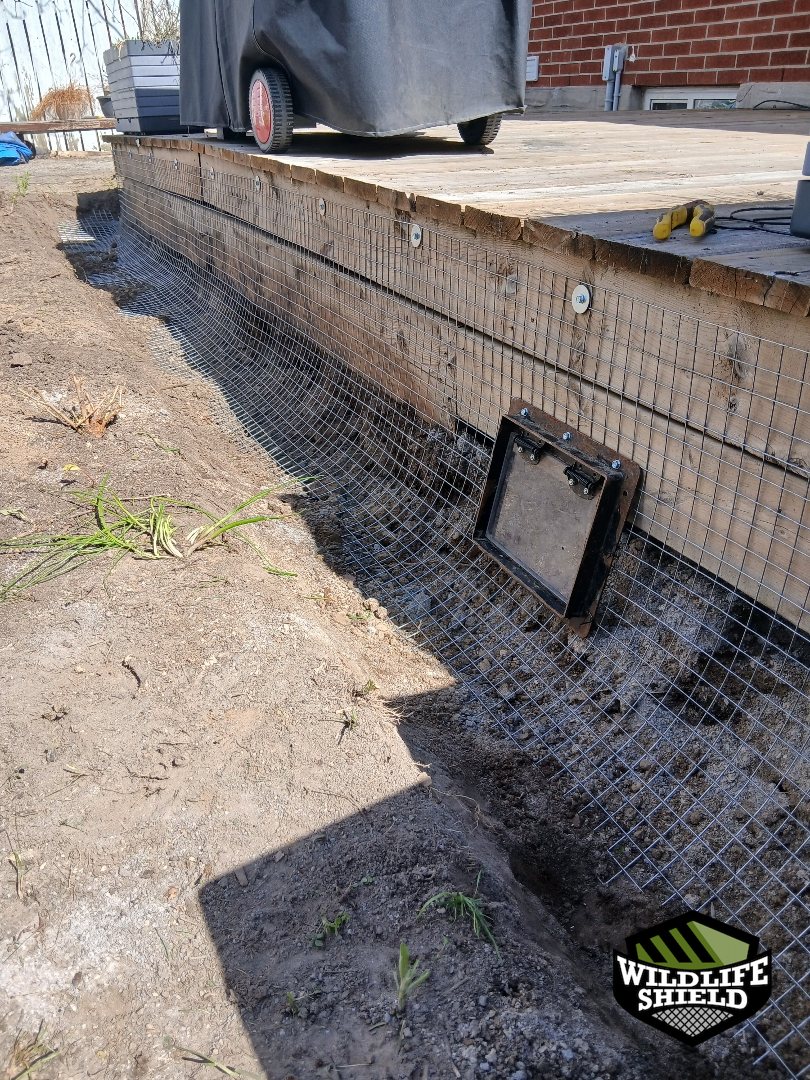
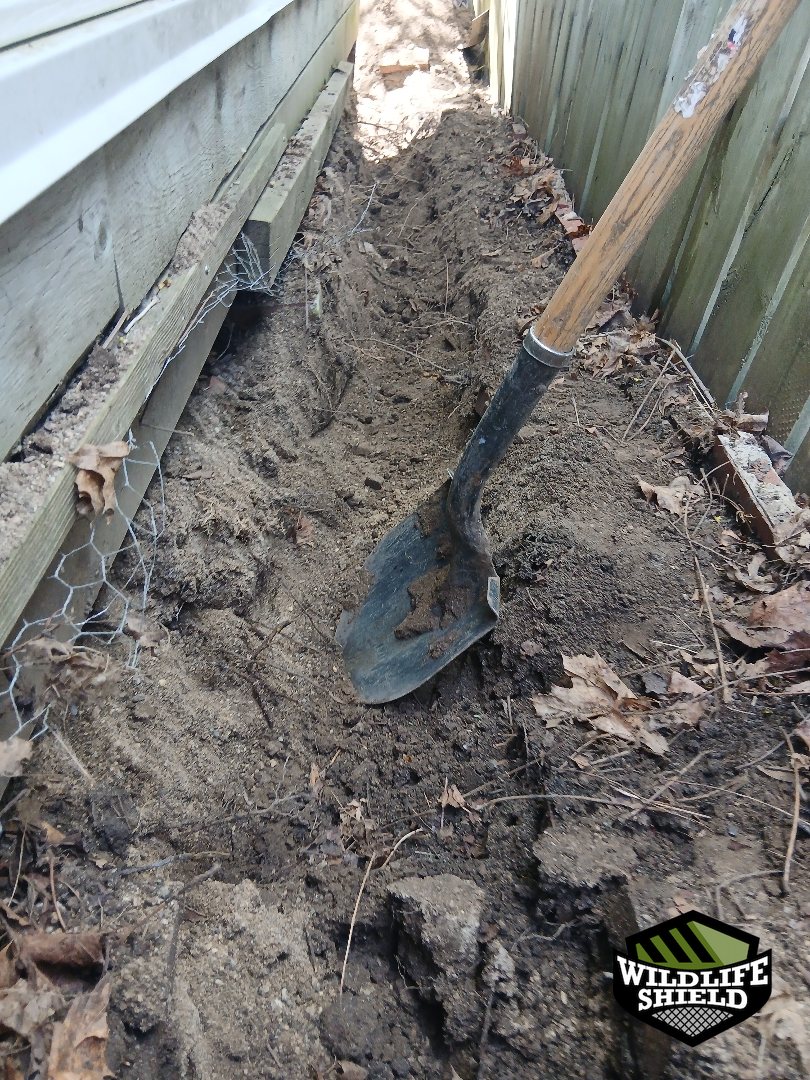
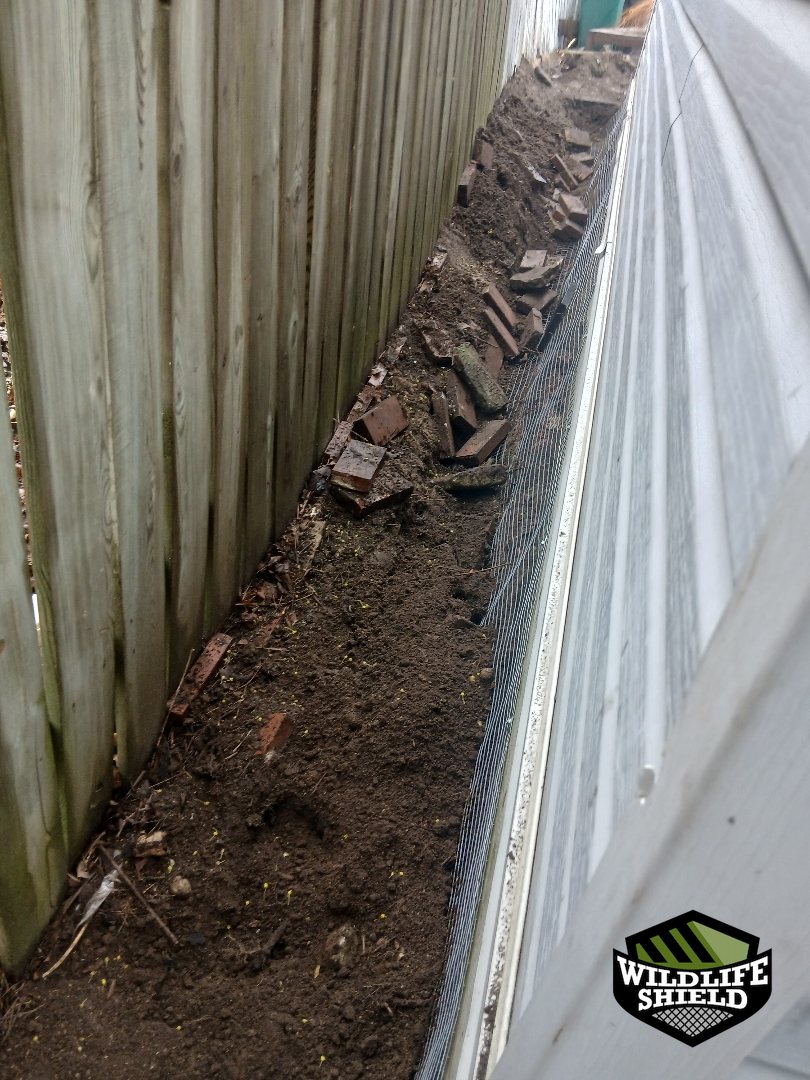
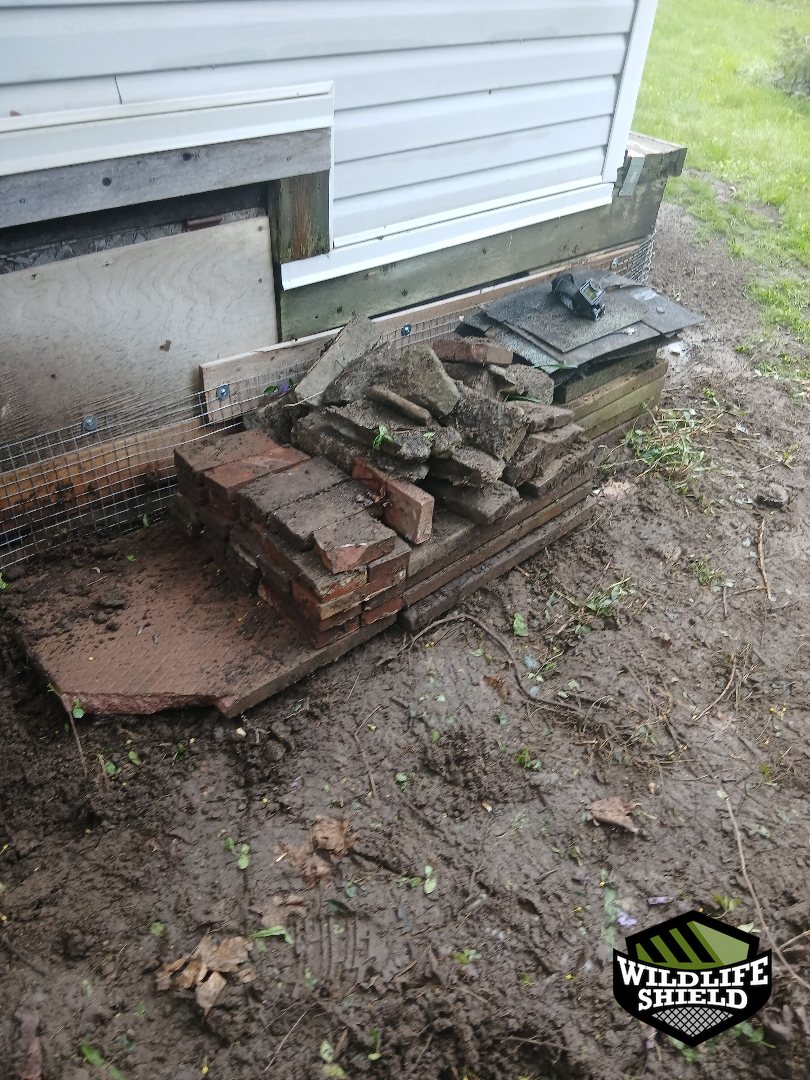
The photographs show:
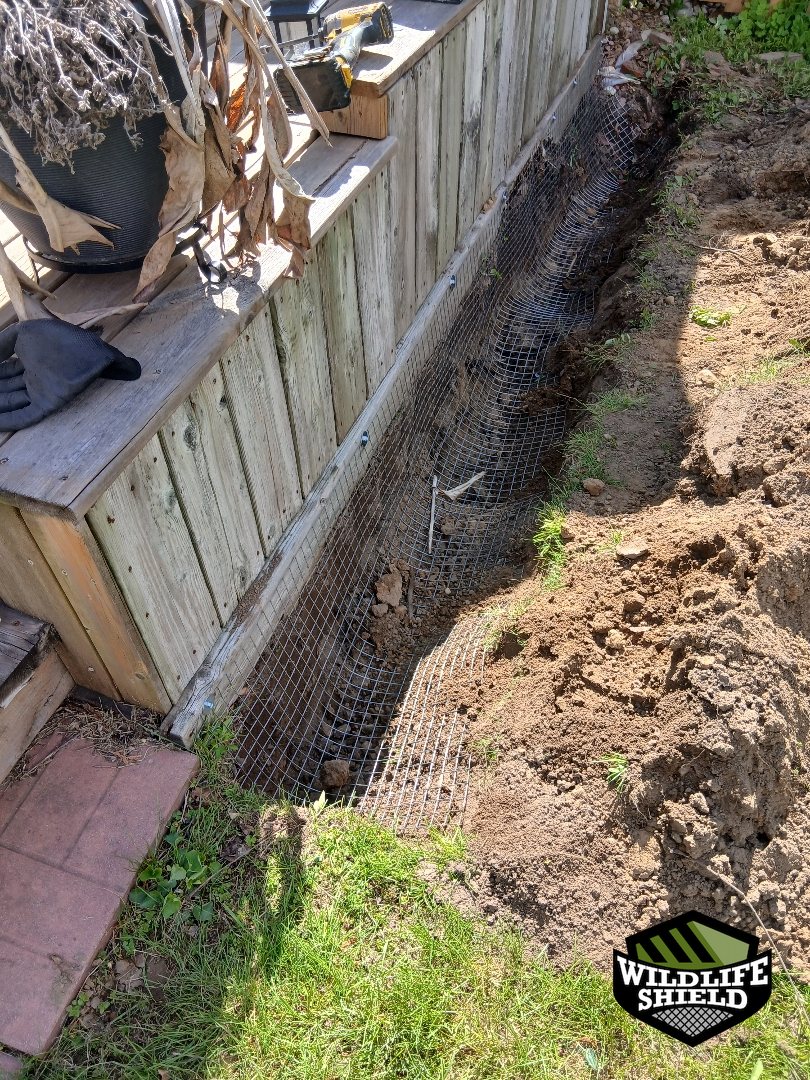
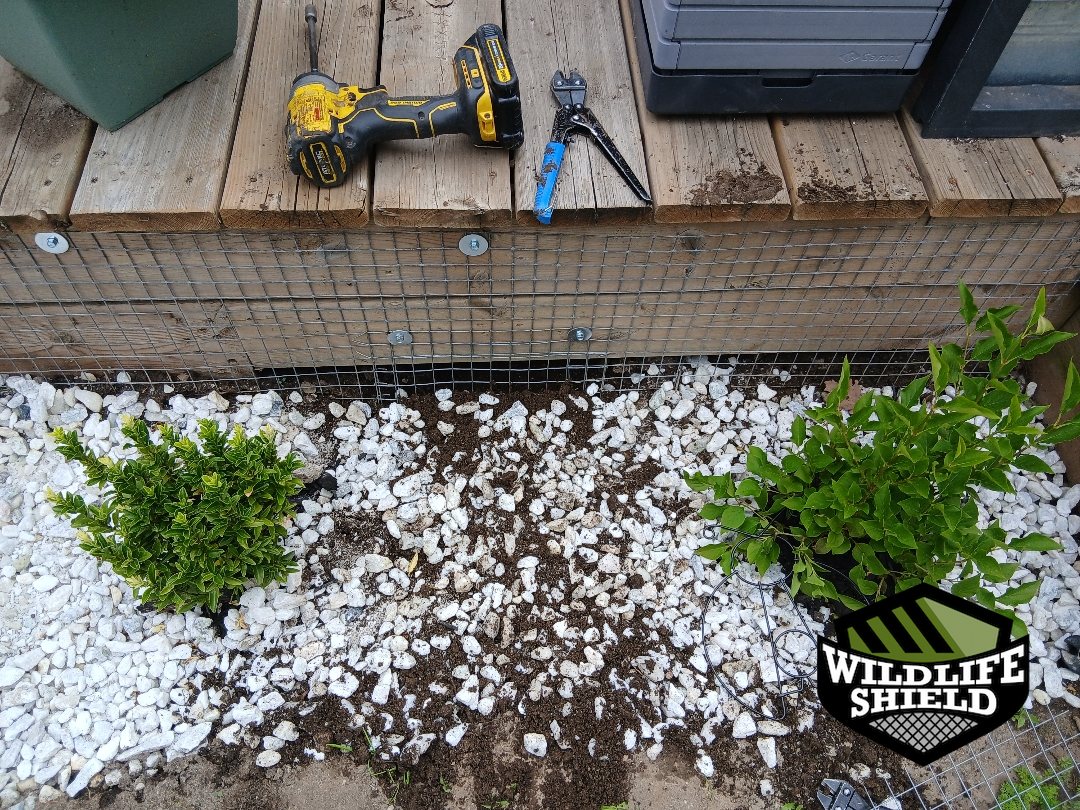
- Excavation around the perimeter of the deck to expose the burrowing areas before exclusion work.
- Active openings beneath the deck structure.
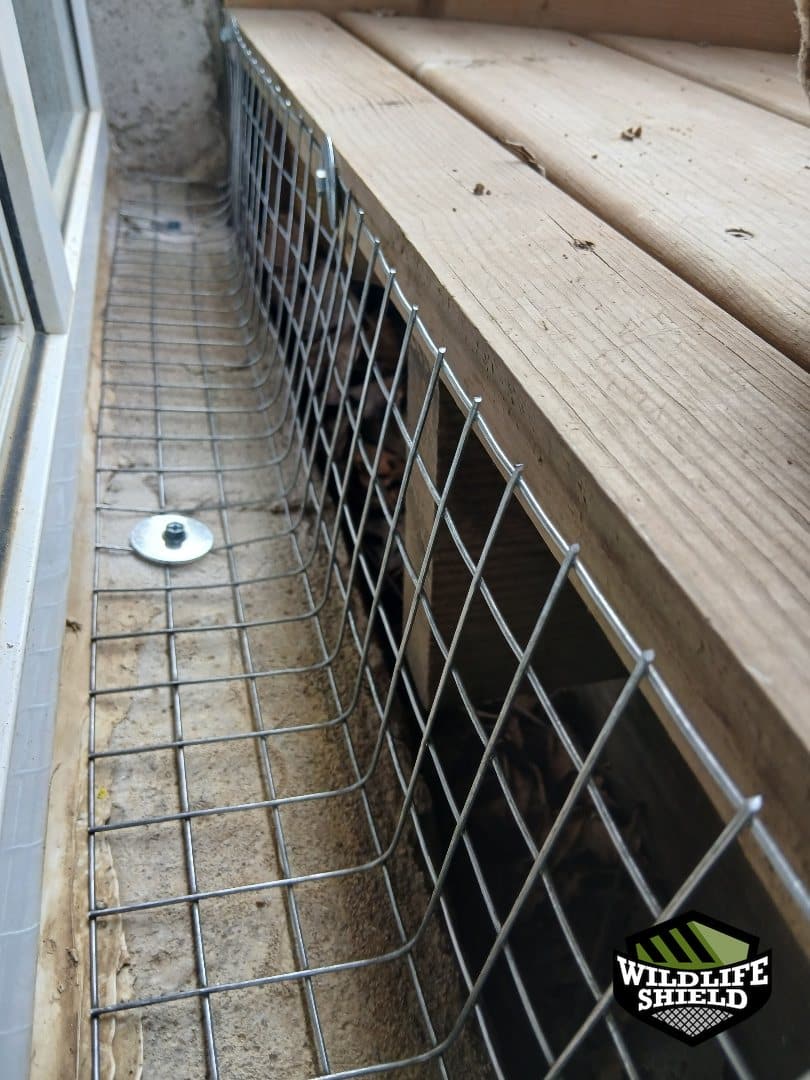
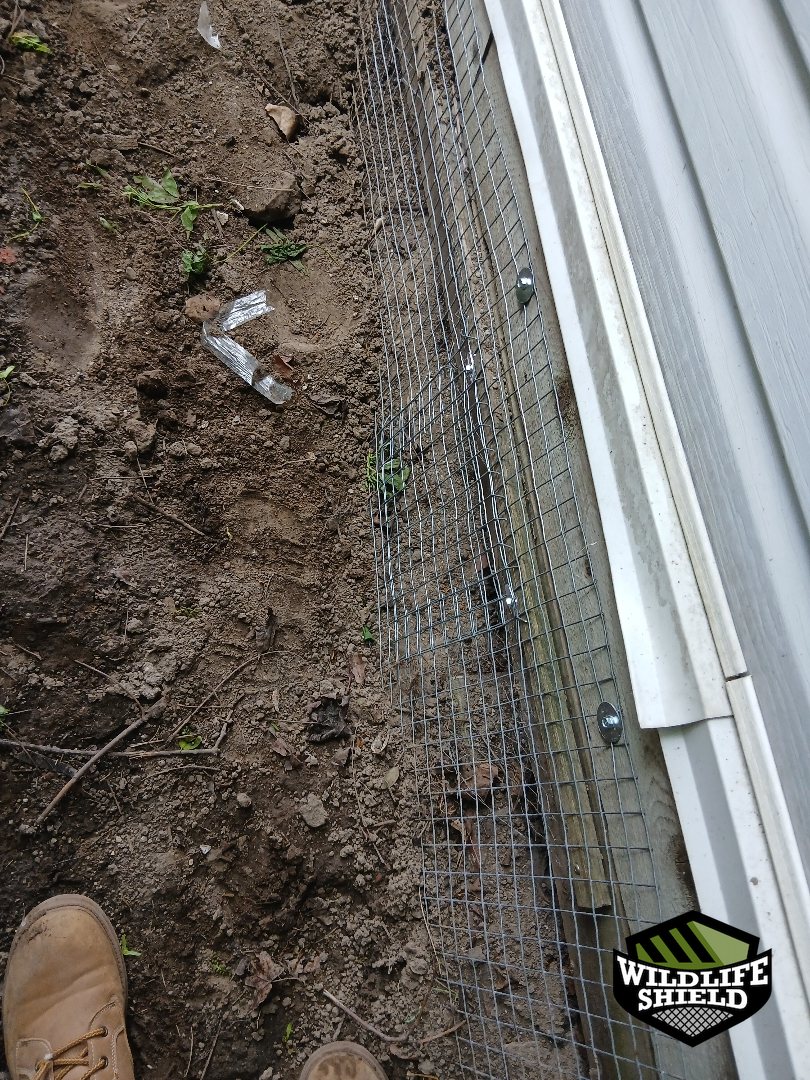
- Installation of galvanized steel mesh along the deck perimeter before backfilling.
- A one-way door installed over an active ground-level entry point.
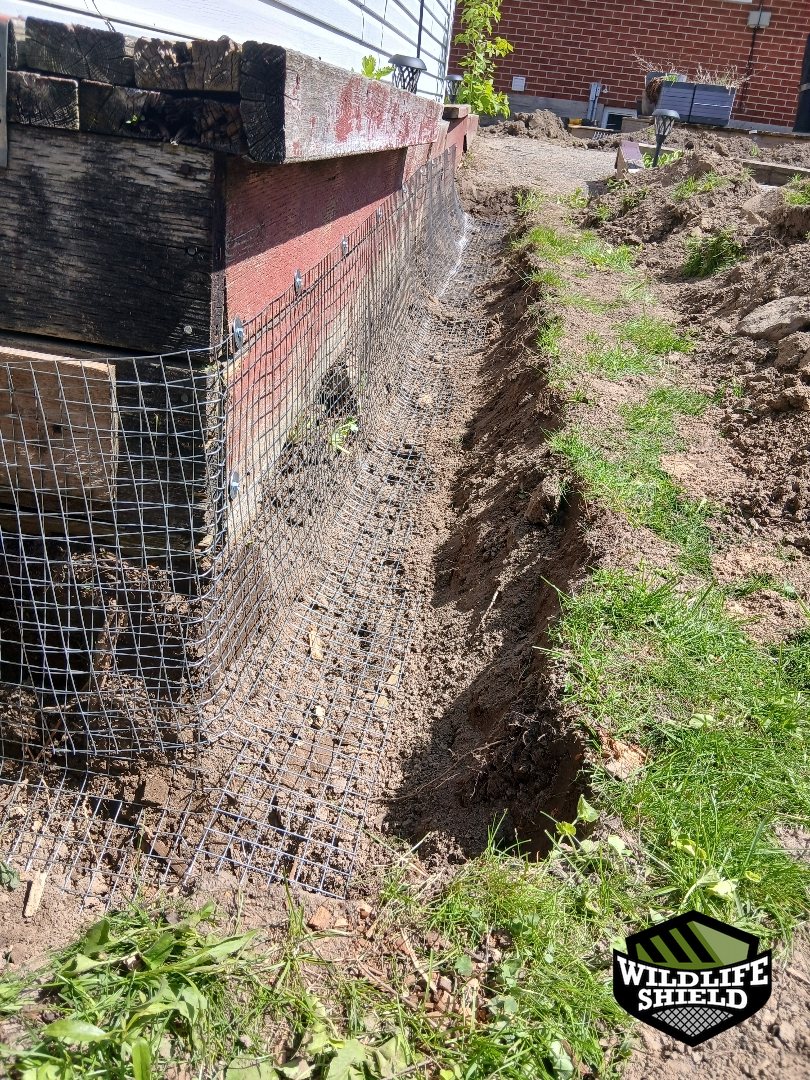
- Trenching completed alongside the foundation and shed to install underground wildlife screening.
- Galvanized steel mesh extending below grade to discourage future digging.
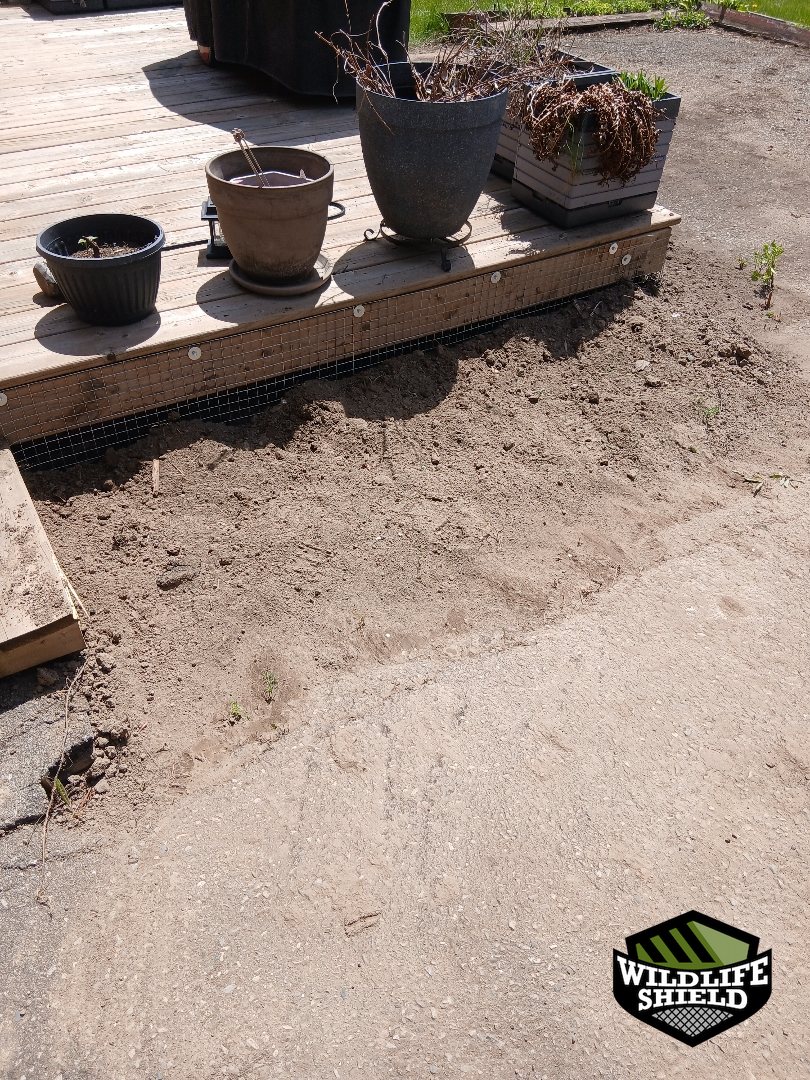
- Completed screening secured beneath the deck and along the foundation after installation.
- The property restored following completion of the exclusion work.
Cause Analysis
Skunks commonly establish dens beneath decks, sheds, and other low outdoor structures because these locations provide shelter from weather and predators. Soft soil around foundations and landscaping makes it easier for wildlife to excavate entrances. Installing underground galvanized steel mesh creates a physical barrier that helps prevent future burrowing in these vulnerable areas.
Treatment / Removal
During the initial visit, Andrew completed a humane removal process that allowed the skunks to leave the den sites naturally.
Work completed included:
- Confirmation of active skunk activity beneath the deck and shed.
- Installation of two one-way doors over the primary entry points.
- Approximately 95 feet of trenching for underground wildlife exclusion.
- Installation of galvanized steel mesh below grade around the vulnerable areas.
- Removal of debris around the shed to allow trenching and screening to be completed.
Exclusion & Repairs
Following the exclusion period, our team returned to verify that the skunks had vacated both den sites.
The one-way doors were removed, the entry points were permanently sealed, and the underground galvanized steel mesh remained in place beneath the deck, around the shed, and along the protected sections of the foundation. The completed exclusion provides long-term protection against future burrowing wildlife.
Outcome & Confirmation
At the final visit, the homeowner reported no further skunk activity on the property. Our inspection confirmed the one-way doors had been removed, all exclusion work remained secure, and no additional wildlife activity was observed.
Technician Notes
Andrew confirmed active skunk denning beneath both the deck and shed during the initial inspection. Humane one-way doors were installed while extensive trench screening was completed using galvanized steel mesh. During the final visit, the one-way doors were removed, all exclusion work was inspected, and no further skunk activity was reported.